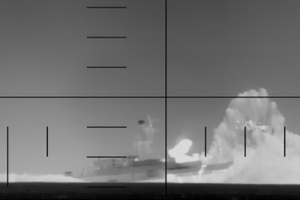

According to a report by Chinese media outlet CCTV Finance, AI short dramas are experiencing explosive growth in the country. The total view count of short dramas during the Chinese Spring Festival period reached 8.67 billion, with AI animated short dramas accounting for nearly 30%, and AI-simulated live-action dramas contributing over 80% of the total view count.
Industry organizations predict that this year the user base will grow to 280 million, and the market size is expected to reach 24 billion yuan. AI technology is disrupting the traditional short drama production model; a computer and a few pieces of software can make a “one-person production team”, significantly lowering the industry threshold and attracting a large number of non-film industry participants.
Following the AI short drama Huo Qubing, which went viral across the Chinese internet with a “3,000-yuan (aprox. $435) computing cost”, AI short drama director Yang Hanhan has become a sensational figure in China.
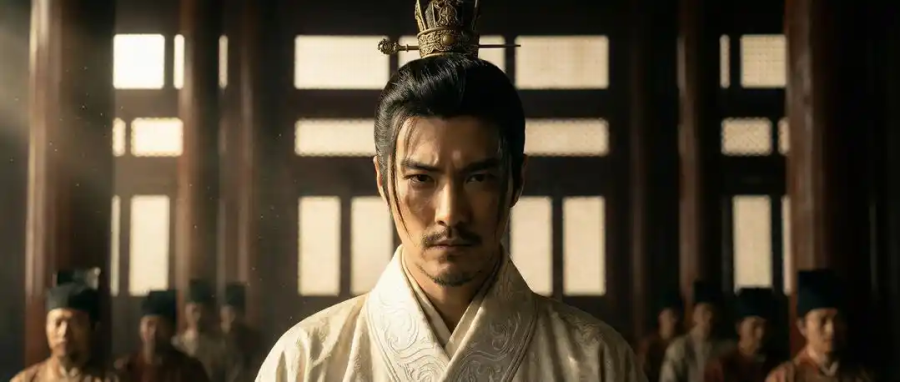
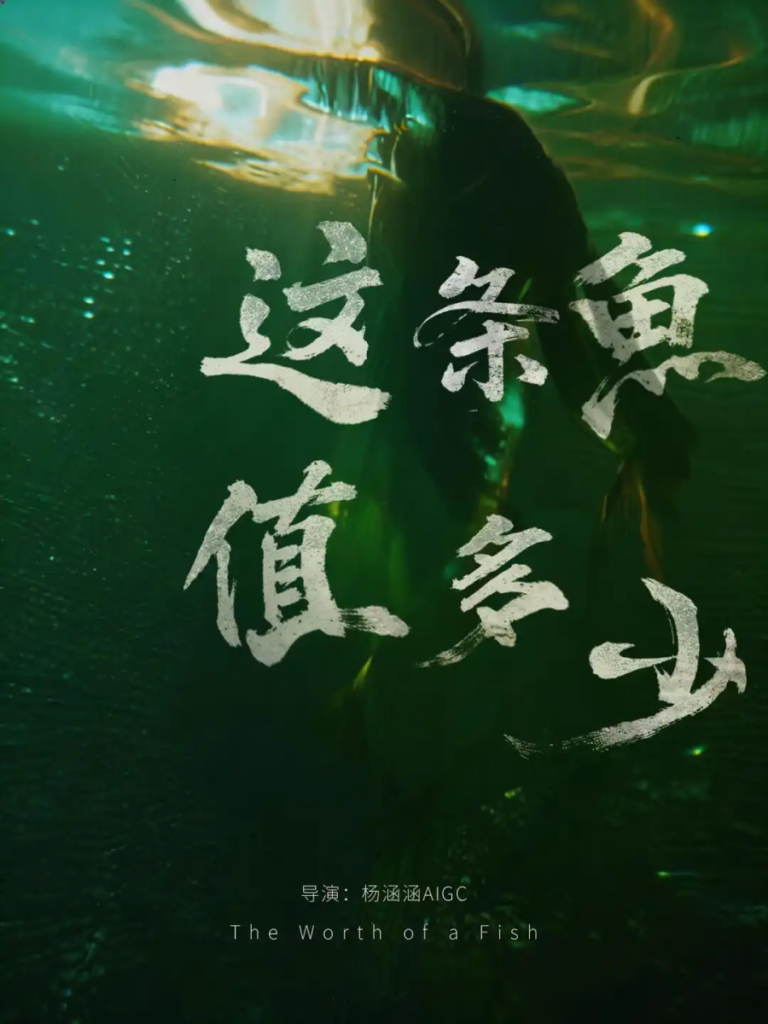
On March 24, Yang Hanhan’s team officially released their new work, The Worth of a Fish, on platforms including People’s Daily. In stark contrast to the grand war scenes of Huo Qubing, this short film focuses on the bargaining over a single fish, attempting to use AI to capture warmth and kindness in ordinary people’s everyday lives. In an exclusive interview with Cover News, Yang Hanhan shared her thoughts on the future of AI dramas.
The story of The Worth of a Fish takes place in 2030, where an elderly man buys a fish at a market, engaging in a tug-of-war over a few yuan with a robot and the fishmonger, ultimately completing the transaction through an interaction full of human warmth. The short film contains no earth-shattering events, only exchanged glances, slight smiles, and conversations brimming with the flavor of everyday life.
“I first wanted to challenge the boundaries of AI in expressing emotions. My inspiration came from the everyday life in Wuhan’s markets. Hearing the fishmongers bargaining with customers, those few words were full of the warmth of ordinary life. It was especially moving. I wondered if AI could capture these small, ‘ordinary but warm’ moments, and that’s how this film came about.”
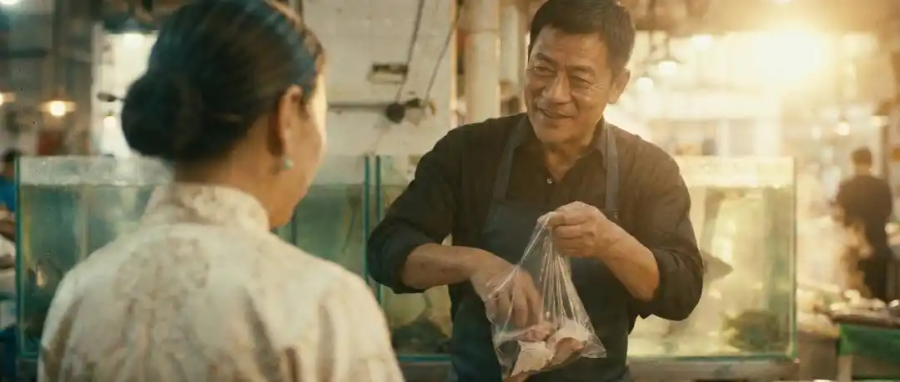
Yang Hanhan told reporters that the production cycle for The Worth of a Fish was about five days, with a core team of just four people, similar to Huo Qubing. “One day for finalizing the script and storyboards, polishing details; three days for generating shots with AI and selecting materials; one day for editing, adding music, and color grading — five working days in total.” She explained the division of labor: “I set the direction and emotional tone, the technical team handles the AI execution, and the content team refines the details.”
Regarding the difficulty of controlling micro-expressions in AI dramas, Yang Han Han said, “The key is breaking emotions down into details that AI can understand.” She gave examples: for instance, “eyes showing some fatigue but still gentle” or “corners of the mouth slightly raised, not a forced smile.” These descriptions are written into precise prompts, and then repeatedly filtered.
Now, the production process for a micro short drama has become streamlined, with different AI tools enabling small teams to create high-quality works. She introduced her team’s workflow: starting from script to storyboard, locking assets, AI generation, manual selection, and finally post-production.
Executive director Xiao Yun told reporters that The Worth of a Fish consumed roughly 25,000 AI computing points, with a computing cost of about 2,500 yuan (approx. $360). He explained that his work involves visual translation, implementing storyboards, and quality control. Visual translation refers to writing prompts and doing preparatory work.
He responded that the team has developed three core production techniques: first, building a dedicated character library; second, breaking down grand scenes; and third, using aggregation platforms to improve efficiency. “By setting prompts on a single interface and having multiple models generate images simultaneously, we can then select and optimize from the results, greatly increasing production efficiency.”
Yang Han Han added that completing a micro short drama in five days is actually slow. “This was a commissioned work for People’s Daily. Because of their requirements, we made two versions. Our own version is the full version, about 8 minutes, while People’s Daily released a 4-minute version.”
Yang Han Han compared that performing the same short film with live actors would take at least one month: casting actors, setting up scenes, two weeks of shooting, and at least a week for post-production, editing, color grading, and dubbing. “In our film, the storyline spans decades. If we were to separately break down scenes, costumes, and props, the cost would be at least dozens of times higher.”

“I studied music performance and also read philosophy. I have nothing to do with film or technology.” Yet, Yang Han Han said the reason she became an AI director is that “I want to create content with culture and emotional depth, and AI gives me the opportunity to achieve that at low cost.”
With the rise of AI short dramas, discussions about whether they will replace live-action short dramas are ongoing. On this, Yang believes the two are not opposites but complementary.
“AI is suitable for grand scenes, high fidelity, and fast-iterating content. Live-action is suitable for delicate emotions, everyday warmth, and the expression of complex human nature.” She said that AI short dramas and live-action short dramas can work together to expand the overall content landscape.
She also admitted that some live-action directors criticize AI content for lacking a “sense of real people.” “I think they’re right. That is exactly the direction we need to work toward,” Yang said.

Director Yang’s AI short drama Huo Qubing went viral amid controversy over “3 people, 48 hours, 3,000-yuan (aprox. $435) cost, 500 million views.” In interviews, Yang responded: “The core of the controversy is people’s curiosity and skepticism about AI films and TV. I think that’s good. It shows that people are paying attention and having discussions.”
She stated that the team’s focus is to use AI to create content that has warmth and texture. Whether it’s historical epics, everyday stories, or city promotion, the mission is always “to tell China’s stories well, and to tell the stories of cities well.”
She revealed that The Worth of a Fish was mainly released on China’s mainstream platforms and official media, with no intensive overseas promotion for the time being.